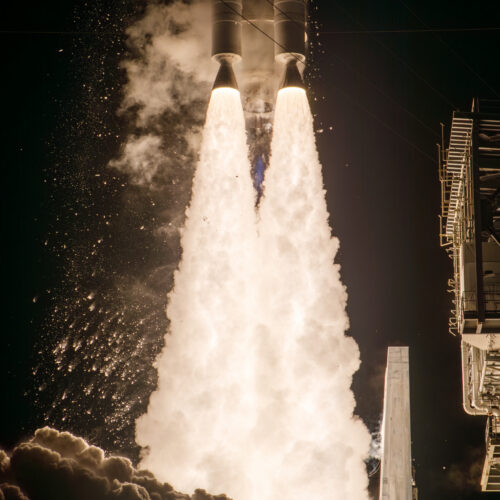
The aerospace industry is abuzz with anticipation as United Launch Alliance’s (ULA) Vulcan rocket edges closer to its inaugural launch. This milestone is drawing near just as an unexpected delay in a SpaceX Falcon 9 mission raises the stakes. The Falcon 9, which typically boasts a high reliability rate, faced a rare launch scrub, creating a unique window of opportunity for Vulcan’s debut.
The Rise of Vulcan
ULA, a joint venture of Lockheed Martin and Boeing, has been developing the Vulcan Centaur rocket as part of its strategy to maintain competitiveness in an evolving space market dominated by reusable rocket technology. The Vulcan rocket, which promises significant advancements in payload delivery and cost efficiency, represents a potential game-changer for ULA.
The upcoming launch aims to cement Vulcan’s role in bolstering national security and advancing scientific exploration. With its capability to carry heavier payloads and reach higher orbits, Vulcan is targeted at missions that require high precision and reliability, areas where ULA has historically excelled.
Falcon 9’s Setback
The recent postponement of a Falcon 9 launch has piqued the interest of space enthusiasts and industry experts alike. Known for its robust launch schedule and technological reliability, a Falcon 9 delay is uncommon and has inevitably sparked curiosity about the causes. Despite this hiccup, SpaceX’s Falcon series has maintained an impressive record of efficiency and reuse with its booster landings.
This development, while a setback for SpaceX, does not detract from the company’s ongoing contributions to space exploration and commercial satellite deployments. Rather, it underscores the high-stakes nature of aerospace engineering, where each component and decision plays a crucial role in a mission’s success.
Implications for Southern California
Although there is no direct impact on Newport Beach and Orange County, the region remains a hub of aerospace activity, with many local companies contributing to the broader space industry. The advancement of rocket technologies like Vulcan and Falcon 9 could lead to increased investment and interest in Southern California’s aerospace sector, potentially creating new opportunities for local businesses and professionals.
As Vulcan prepares for its potential breakthrough and Falcon 9 works towards resolving its recent challenges, the space community is keenly observing how these developments will shape future discourse regarding launch reliability, innovation, and collaboration in space exploration.