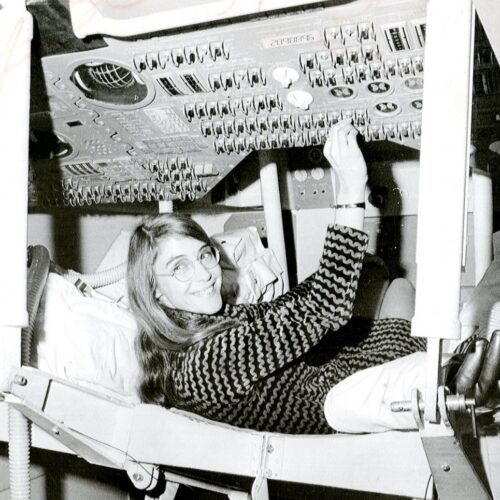
 Margaret Hamilton, the pioneering computer scientist whose work was pivotal to the success of the Apollo 11 moon landing, passed away at the age of 90. Hamilton’s contributions to software engineering not only ensured the safe landing of the first astronauts on the moon but also laid foundational elements for modern computing technologies.
A Legacy in Software Development
Hamilton, who led the team that developed the flight software for the Apollo space program, was instrumental in creating protocols to handle unexpected errors, a crucial innovation that helped Apollo 11 avoid disaster. The intricate systems she designed were responsible for managing spacecraft navigation and communications—tasks critical to the mission’s success.
Nicknamed the “mother of software engineering,” Hamilton coined the term to describe the burgeoning field that would become indispensable to countless industries. Her contributions went beyond just coding; they encompassed system reliability and error-correction, concepts that resonate throughout today’s technology landscape.
An Inspiration to Future Generations
Beyond her technical achievements, Hamilton has served as an inspiration to countless women in STEM fields. At a time when women were significantly underrepresented in science and engineering, Hamilton established herself as a leader, breaking barriers and showing that talent and determination can overcome societal limitations.
Hamilton’s work and legacy continue to inspire young engineers and developers, particularly women, encouraging them to pursue careers in fields historically dominated by men. Her life exemplifies how curiosity and perseverance can innovate entire fields of study.
Honors and Recognition
Throughout her career, Hamilton received numerous accolades for her contributions to software engineering and space exploration. In 2016, she was awarded the Presidential Medal of Freedom by President Barack Obama, who highlighted her as a symbol of what ambitious innovators can achieve.
Her recognition helped bring to light the critical role software played in the success of the Apollo missions and has inspired many educational initiatives intended to encourage more students to explore science and technology disciplines.
Closing Reflection on a Tech Icon
Hamilton’s impact on software development and engineering cannot be overstated. Her pioneering efforts in creating robust and reliable systems set the stage for future generations of engineers to build upon. In Newport Beach and across the world, Margaret Hamilton’s legacy will continue to be a beacon for those who dream of advancing technology to new heights.
Though she is no longer with us, Margaret Hamilton’s contributions will be remembered as integral to the history of human space exploration and the evolution of software engineering. Her work continues to resonate, reminding us that the future of technology is limited only by our imagination.