
California’s State Controller is supposed to protect taxpayer dollars, expose government waste, and demand financial accountability. But what happens when the watchdog’s own office becomes the subject of troubling audit findings?
By Staff | Investigative Opinion
California has no shortage of financial problems. From persistent budget pressures to questions about government spending and financial reporting, taxpayers have plenty of reasons to demand greater transparency.
At the center of that responsibility sits California State Controller Malia Cohen.
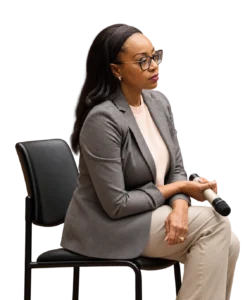
Elected in 2022, Cohen assumed an office entrusted with overseeing state financial resources, auditing government agencies, administering payroll, and serving on powerful financial boards.
The office is designed to be a safeguard against waste, inefficiency, and financial mismanagement.
But a growing collection of public records raises an uncomfortable question:
Is California’s financial watchdog demonstrating the same level of accountability that taxpayers are entitled to expect from the government agencies she oversees?
That question has become particularly urgent following an October 1, 2026, California State Auditor report documenting improper activities within the Controller’s Office.
And it opens the door to a broader examination of campaign promises, financial transparency, institutional relationships, and the difference between holding an accountability-focused office and delivering measurable accountability.
1. When the Watchdog Becomes the Subject of an Investigation
The most immediate concern is not political speculation.
It is an official state investigation.
On October 1, 2026, the California State Auditor released investigative report I2026-1, documenting improper governmental activities across multiple agencies.
Among its findings were significant problems within the State Controller’s Office.
Investigators determined that the office violated state law by failing to collect an employee receivable. They also found that high-ranking officials developed a poorly conceived plan addressing receivables involving two employees.
The result?
More than $33,000 went uncollected for over a year.
The report additionally identified violations involving two managers who worked remotely from outside California.
These are not anonymous internet allegations. They are findings from an independent state oversight agency.
That distinction matters.
But so does another distinction: the report does not establish that Cohen personally directed these actions or knew about every underlying violation.
Still, the leadership question is unavoidable.
If the State Controller’s Office is responsible for administering California’s payroll and protecting public financial resources, what does it say about its management controls when its own senior officials fail to handle employee receivables properly?
Who was responsible for ensuring compliance?
When were the problems identified internally?
What corrective measures were implemented, and how was their effectiveness measured?
The public deserves more than assurances that policies are being reviewed.
It deserves evidence that the problems have been corrected.
2. Accountability Was the Promise. Where Is the Scorecard?
When Cohen took office in January 2023, she emphasized fiscal accountability, transparency, and innovation.
Those are appropriate priorities for California’s chief fiscal officer.
But political commitments should eventually become measurable outcomes.
An effective Controller should be evaluated through questions such as:
- Which government agencies have been audited?
- Which audits identified substantial waste or improper expenditures?
- How much money was recovered or protected?
- Which recommendations were implemented?
- What financial reporting improvements can be attributed to the administration?
- Which promised oversight priorities remain incomplete?
These questions are especially important when campaign rhetoric emphasizes exposing waste and strengthening public confidence.
An announcement is not an audit.
An audit is not necessarily a recovery.
And a recommendation is not a completed reform.
California taxpayers should be able to follow the entire accountability process, from identifying a problem to documenting its resolution.
That is the scorecard the Controller’s Office should make easy to examine.
3. The Financial Reporting Question
Financial reporting is another area deserving sustained scrutiny.
The California State Auditor published a report on July 31, 2026, concerning the state’s late financial reporting.
The existence of that report establishes that financial reporting timeliness remains an official oversight concern.
It does not, by itself, establish that Cohen personally caused the delays or that every reporting deficiency originated during her administration.
Nevertheless, the Controller’s role makes the subject relevant.
When the public needs timely information about California’s financial condition, delayed reporting can complicate oversight and public understanding.
How much of the delay can be attributed to inherited systems?
Which responsibilities fall directly within the Controller’s authority?
What reforms have been completed?
And how should taxpayers distinguish meaningful improvements from administrative announcements?
These are the questions that should shape the discussion.
There is also evidence of progress that deserves acknowledgment: Cohen’s office announced the release of timely audited financial statements in 2026.
That development belongs in any serious assessment.
The question is not whether every financial indicator is negative.
It is whether the complete record demonstrates consistent, measurable improvement.
4. Seventy Boards and Commissions. How Much Accountability?
According to her official biography, Cohen serves on approximately 70 boards and commissions.
These responsibilities touch public pensions, affordable housing, taxation, financial oversight, and other areas of state government.
The scope is extraordinary.
But breadth of responsibility should invite scrutiny of actual participation and decision-making.
What decisions has Cohen personally supported?
Which financial risks has she challenged?
When has she voted against a proposal?
How frequently has she participated in significant deliberations?
And where can taxpayers review those decisions without navigating dozens of disconnected government websites?
This is particularly relevant to affordable housing and public financing.
California’s housing programs involve complex relationships among public agencies, developers, financing entities, nonprofit organizations, and elected officials.
Such relationships are not inherently improper.
But they make transparent decision records essential.
A responsible review would examine meeting minutes, voting records, disclosures, campaign contributions, and the financial interests associated with particular decisions.
The relevant question is not simply who knows whom. It is whether public decisions can be independently examined and justified.
Political proximity is not proof of favoritism.
Financial relationships should not be described as corruption without evidence connecting them to improper official action.
But the absence of proven misconduct does not eliminate the public’s right to scrutinize those relationships.
5. Political Experience Versus Financial Expertise
Cohen’s official biography establishes extensive experience in public policy and government leadership.
She previously served on the San Francisco Board of Supervisors and California Board of Equalization.
Her educational background includes political science and public policy management.
That experience is relevant to the Controller’s position.
However, her official biography does not identify professional accounting or auditing credentials.
That distinction raises a legitimate governance question:
How does a Controller whose professional background is primarily political and administrative ensure that complex financial oversight receives the technical leadership it requires?
The answer should not depend solely on the officeholder’s personal credentials.
Elected executives routinely oversee specialized functions without personally performing every technical task.
What matters is whether they recruit qualified professionals, maintain effective internal controls, act on audit findings, and demonstrate informed decision-making.
The performance of the institution is ultimately more revealing than the résumé of its elected leader.
6. The Political Network Deserves Transparency, Not Assumptions
Campaign finance is an unavoidable part of statewide politics.
Contributors, consultants, political organizations, and industry representatives regularly participate in the electoral process.
Cohen is no exception.
The public has a legitimate interest in understanding how those relationships intersect with governmental responsibilities.
But meaningful scrutiny requires more than compiling names.
It requires identifying documented contributions, relevant official decisions, financial interests, disclosure obligations, and evidence of any actual conflict.
For example, if a contributor has an interest in a matter before a board on which the Controller serves, several questions become relevant.
Was the contribution properly disclosed?
Did the Controller participate in the decision?
Was recusal legally required?
Was the decision consistent with established criteria?
Did the contributor receive treatment that differed from comparable applicants?
These questions are fair.
What would not be fair is treating a donation, professional association, or shared political consultant as evidence of an undisclosed arrangement without additional proof.
The standard should be consistent regardless of political affiliation.
Transparency must apply equally to public officials and to those examining them.
7. The Most Important Question May Be What Happens After an Audit
California has an extensive government oversight infrastructure.
Auditors identify problems.
Agencies respond.
Recommendations are issued.
Corrective-action plans follow.
But the real measure of accountability comes afterward.
Were the recommendations implemented?
Did the underlying failures stop?
Was public money recovered?
Were policies revised and enforced?
Did the same problem reappear?
In the Controller’s Office investigation, the agency reported steps toward improving its policies and monitoring procedures.
That response is relevant.
But an announced corrective measure is not equivalent to independently verified compliance.
This is where public accountability often becomes difficult to follow.
Initial audit findings receive attention.
The implementation process may receive far less.
For taxpayers, however, implementation is the outcome that matters most.
8. What Cohen Should Be Asked to Explain
A substantive public examination of Cohen’s tenure should focus on documented results rather than insinuations.
The Controller should be given an opportunity to address the October 2026 findings, explain the management changes made in response, and provide evidence of compliance.
Her office should also be able to demonstrate its progress on financial reporting, audit commitments, and the oversight priorities emphasized during her campaign.
For board and commission responsibilities, taxpayers should have access to clear records showing participation, votes, relevant disclosures, and significant decisions.
These are not extraordinary demands.
They are basic expectations for an office whose central purpose is financial accountability.
And they provide a fairer test of performance than political advertising, opposition allegations, or selective anecdotes.
9. The Accountability Standard Cannot Change Depending on Who Holds Office
There is a temptation in political debate to reduce every controversy to two opposing narratives.
One side declares scandal.
The other dismisses criticism as partisan.
Neither approach is sufficient.
The October 2026 audit findings are real and deserve attention.
Cohen’s administration also has a record of financial reporting, policy activity, and oversight work that must be examined on its merits.
A serious evaluation must consider both.
The question is not whether every problem within a large state agency can be blamed on one elected official.
It is whether that official accepts responsibility for improving the institution, provides meaningful public explanations, and produces measurable results.
Accountability is not a campaign identity. It is a continuing obligation.
California’s Watchdog Must Be Willing to Answer Questions
Malia Cohen occupies one of California’s most consequential financial oversight positions.
The authority of that office is significant.
So is the public trust attached to it.
The State Auditor’s October 2026 findings provide a concrete reason to examine the Controller’s Office’s internal management.
The broader questions involving campaign commitments, financial reporting, board participation, and political relationships deserve careful, documented investigation.
None of those questions should be used to imply criminal conduct without evidence.
But neither should legitimate questions disappear beneath political messaging.
California taxpayers deserve an accessible record of what their financial watchdog has accomplished, where the office has fallen short, and what has been done to correct documented problems.
The watchdog does not need to be above criticism.
It needs to be accountable to the same standards it is entrusted to enforce.
Primary sources and further reading
- California State Auditor — Investigative Report I2026-1, October 1, 2026
- California State Auditor — Reports Concerning the State Controller’s Office
- California State Controller — Official Biography
- California State Controller — Functions and Responsibilities
- Los Angeles Times — 2026 Controller Election Voter Guide
Editorial disclosure: This article is investigative opinion based on public records and identified accountability questions. It does not allege that Malia Cohen personally committed a crime or that unverified political relationships establish misconduct. Cohen’s response to the specific questions raised here has not been obtained for this article.