


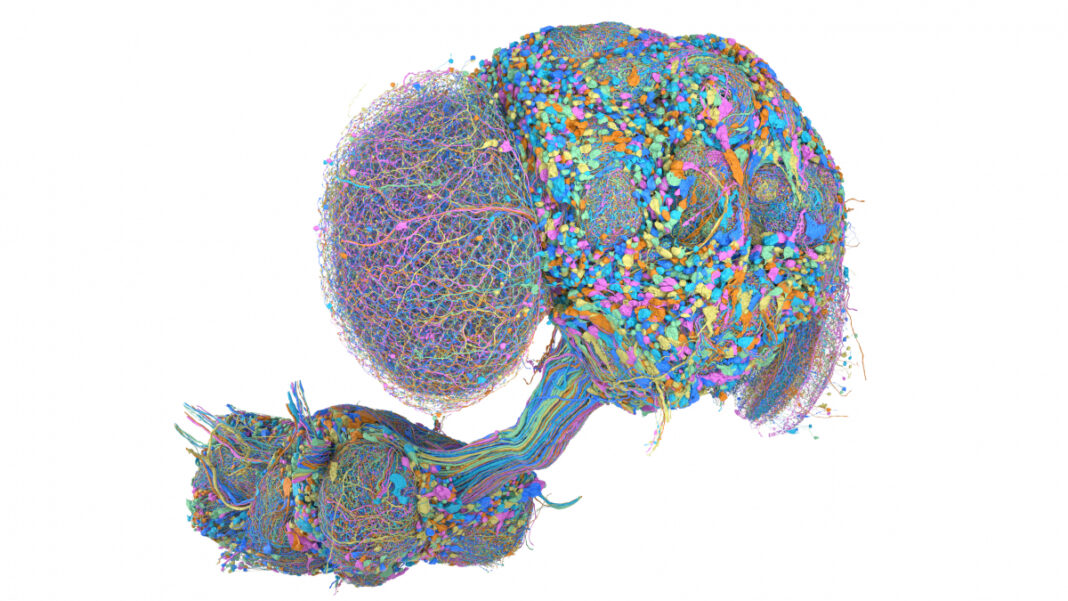
The scientific community has reached a significant milestone with the completion of a comprehensive map of a male fruit fly’s brain. This achievement follows the earlier mapping of the female fruit fly brain, marking a major advancement in the field of neuroscience and genetic research.
Understanding the Fruit Fly Brain
Researchers from the University of Cambridge and the Howard Hughes Medical Institute have meticulously mapped approximately 4,600 neurons and over 3 million synapses that make up the male fruit fly’s brain. This detailed cellular map, or connectome, provides insight into how neural circuits function and how they compare between genders in these insects.
Fruit flies, known scientifically as Drosophila melanogaster, have been a cornerstone of genetic research for over a century, due in part to their relatively simple brain structure and rapid life cycle. The completion of this connectome enhances our understanding of fundamental neurological processes and could have implications for research into more complex brains, including those of humans.
The Implications of the Research
By mapping both male and female fruit fly brains, scientists can delve into comparative studies to understand gender-based neural differences. This work opens the door to exploring how behaviors and neurological disorders develop and vary between sexes, offering potential insights that could influence treatments and therapies for human diseases.
Furthermore, the methodology developed for this mapping effort can be applied to other species, thus broadening the scope of research to various other biological questions. As researchers continue to innovate, they may unravel more complex brain structures in other organisms, providing further insight into the intricacies of neural functions.
Next Steps in Neuroscience
The successful completion of both the male and female fruit fly brain maps sets the stage for future research projects, aiming to decode the molecular basis of neural development, behavior, and the evolution of the brain. As the scientific community examines these connectomes, they will work to piece together vast amounts of data to simulate brain function collaboratively.
The findings could serve as models for artificial neural networks in artificial intelligence, potentially influencing technology development and leading to smarter, more efficient computational systems.
Local Relevance and Engagement
While this remarkable achievement was spearheaded by international institutions, the scientific progress it represents resonates globally, including in hubs of innovation such as Orange County. Local universities and research centers may draw inspiration from these findings, potentially leading to collaborative projects and educational initiatives in the area. This remarkable research showcases a leap forward in science, fittingly appealing to communities that support and prioritize cutting-edge technological and scientific development.
Overall, the mapping of the male fruit fly brain not only represents a milestone for neuroscience but also highlights the continuous pursuit of knowledge that defines human curiosity and ingenuity. As these efforts progress, the implications for understanding and treating neurological conditions remain a beacon of hope for future generations.